Contract Manufacturing for Solid Beverages and Stick Packs: Blend Uniformity and Moisture Barrier
A comprehensive guide for emerging nutrition brands evaluating solid beverage and 1.5g to 10g stick pack manufacturing, focusing on blend uniformity, foil barriers, and quality assurance.
Key points
- Micro-ingredient actives such as probiotics and vitamins require geometric dilution pre-blending verified by multi-point CV sampling.
- Stick pack moisture resistance relies on composite film water vapor transmission rates and online sealing integrity testing.
- Brand sampling timelines distinguish mature catalog formulas (3 to 7 business days) from custom developments (7 to 15 days).
Why Stick Packs Serve as a Benchmark in Powder Manufacturing
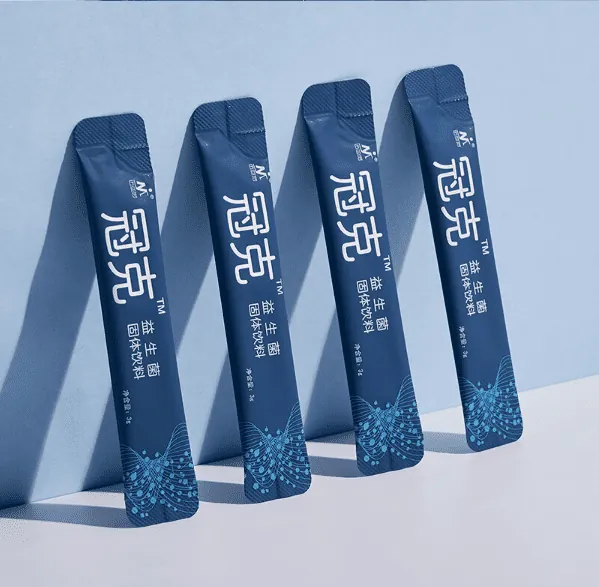
For brands entering the functional nutrition sector with probiotics, protein blends, electrolytes, or botanical extracts, single-serve stick packs (typically 1.5g, 2g, 3g, or 5g formats) offer consumer convenience and precise dosage control.
However, brand owners frequently encounter three critical manufacturing challenges:
- Active Ingredient Variance: Probiotics or micro-nutrients show uneven distribution across individual sachets, leading to potency or flavor discrepancies between packets.
- Moisture Uptake and Caking: In humid distribution environments, hygroscopic powders can cake or harden prematurely due to micro-leakages or inadequate barrier films.
- Pilot-to-Production Gaps: Bench-scale samples perform well, but high-speed automated packaging lines cause powder dusting, seal contamination, and fill-weight variations.
Selecting a qualified contract manufacturer requires evaluating technical blending controls, barrier packaging integrity, and batch release protocols rather than facility floor area alone. Facility details can be reviewed on our manufacturing overview page.
Blend Uniformity: Achieving Consistent Potency Across Every Sachet
Solid beverage formulations combine bulk carriers (such as maltodextrin, resistant dextrin, or erythritol) with potent micro-actives. When active ingredients represent less than 1% or 0.1% of the total formulation, standard single-stage mixing risks particle segregation and stratification.
Brand owners should evaluate three specific blending controls during supplier qualification:
Geometric Dilution Pre-Blending Protocols. The manufacturer should maintain documented pre-mixing procedures that step-dilute micro-actives with carriers in ratios such as 1:1, 1:3, and 1:9 using three-dimensional or double-cone blenders before transferring into the primary blending vessel.
Uniformity Verification and Coefficient of Variation (CV). Request historical blend uniformity reports for comparable formulations. A qualified supplier conducts multi-point sampling across top, middle, bottom, and peripheral blender zones, maintaining a Coefficient of Variation (CV) within 5%.
Anti-Static and Powder Flow Management. For fine botanical extracts or electrostatic powders, the manufacturer should optimize excipient ratios (such as microcrystalline cellulose and food-grade silica) to prevent hopper wall adhesion and auger feed bridging.
Stick Pack Sealing and Barrier Protection Against Moisture
Product degradation in functional powders is predominantly driven by moisture transmission or defective heat seals. Foil packaging alone does not guarantee moisture resistance.
Composite Film Barrier Specification. Film selection must align with ingredient hygroscopicity:
- Standard Protection: PET / AL / PE or BOPP / VMPET / PE structures for general protein and flavored beverage powders.
- High-Barrier Protection: Pure aluminum composite laminates (such as PET / AL / NY / PE) with water vapor transmission rates (WVTR) below 0.5 g/(m²·24h) for live probiotics and sensitive botanical actives.
Online Multi-Lane Packaging Process Controls. High-speed filling can generate fine airborne dust that settles on seal margins, compromising thermal fusion. Qualified operations utilize integrated dust extraction nozzles and precision servo augers, supported by routine underwater vacuum decay leak testing on every shift.
Thermal and Environmental Controls for Probiotic Formulations
For live probiotic powders, facility environmental parameters dictate viable cell counts at release:
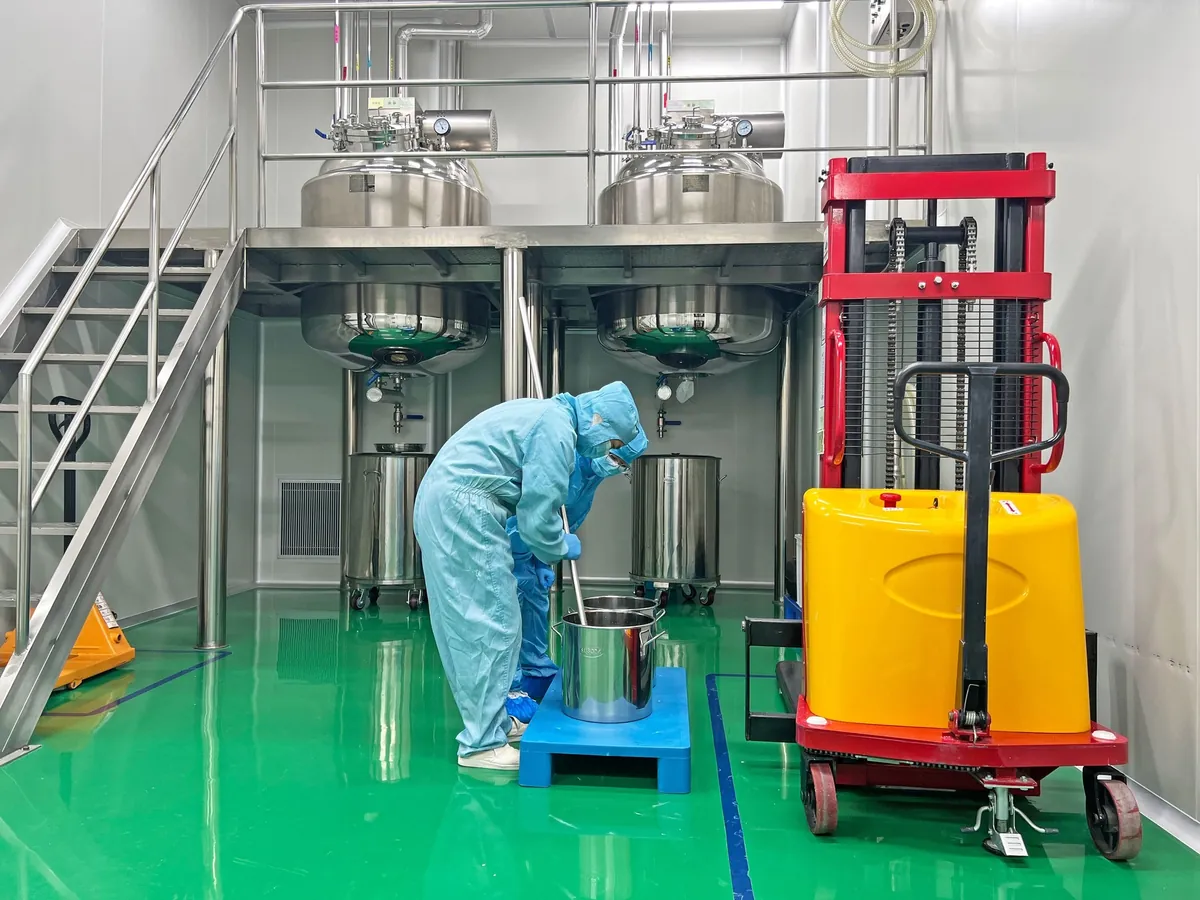
Low-Humidity Cleanroom Processing. Probiotic blending and filling suites must maintain relative humidity at or below 45% (and below 35% for sensitive strains) at temperatures between 20°C and 24°C, preventing premature hydration and viability loss during open handling.
Low-Shear Handling Protocols. ATXA implements staged environmental zoning and controlled low-shear blending to protect bacterial cell wall integrity, providing overage calculation models based on target shelf-life release specs.
Commercial Onboarding: Sampling Timelines, MOQ, and Batch Documentation
To help brands balance working capital risks with market validation timelines, ATXA establishes transparent delivery boundaries:
- Sampling Turnaround: Standard catalog formulations deliver trial samples within 3 to 7 business days; custom flavor matching or novel active blending completes in 7 to 15 days.
- Minimum Order Quantities (MOQ): Standard commercial runs typically begin at 100,000 stick packs, while initial pilot launch volumes are evaluated based on batch raw material minimums.
- Packaging Engineering Support: Complimentary review of dieline dimensions, regulatory labeling formatting, and net weight declarations; brand artwork is supplied by the client.
- Batch Release Documentation (COA): Every commercial batch includes a full Certificate of Analysis covering physical attributes, moisture, net weight tolerance, microbiological limits, and heavy metals.
When planning a functional powder or stick pack product, prepare your target active profile, desired sachet fill weight, and initial pilot volume. Contact our team in Panyu, Guangzhou to arrange technical evaluation and sample preparation.
Sources and scope
- ATXA Manufacturing Capabilities
Overview of powder processing, stick pack lines, and cleanroom operations.
- ATXA Quality Management
ISO 22000, HACCP, and commercial batch testing standards.
- ATXA Project Consultation
Technical intake and sampling coordination for contract manufacturing.
Sources checked and this article last revised on 2026-10-28. Source pages may change; refer to their current content.