From Sample to Batch: How to Review Samples and Batch Records
A method for the middle of an OEM/ODM project: staged sampling, version control and change records, what sealed and retained samples can and cannot tell you, reading a certificate of analysis in a fixed order, and the records needed to release a production batch.
Key points
- Sampling advances in stages, and each stage confirms something the previous one could not.
- Version numbers, sealed samples and retained samples together decide whether a later question can be answered at all.
- A certificate of analysis covers the sample, the items and the criteria on that report, and nothing wider.
- Release and deviation handling need an agreed document scope and a named owner before the first batch runs.
Sampling runs in stages, and each stage confirms something different
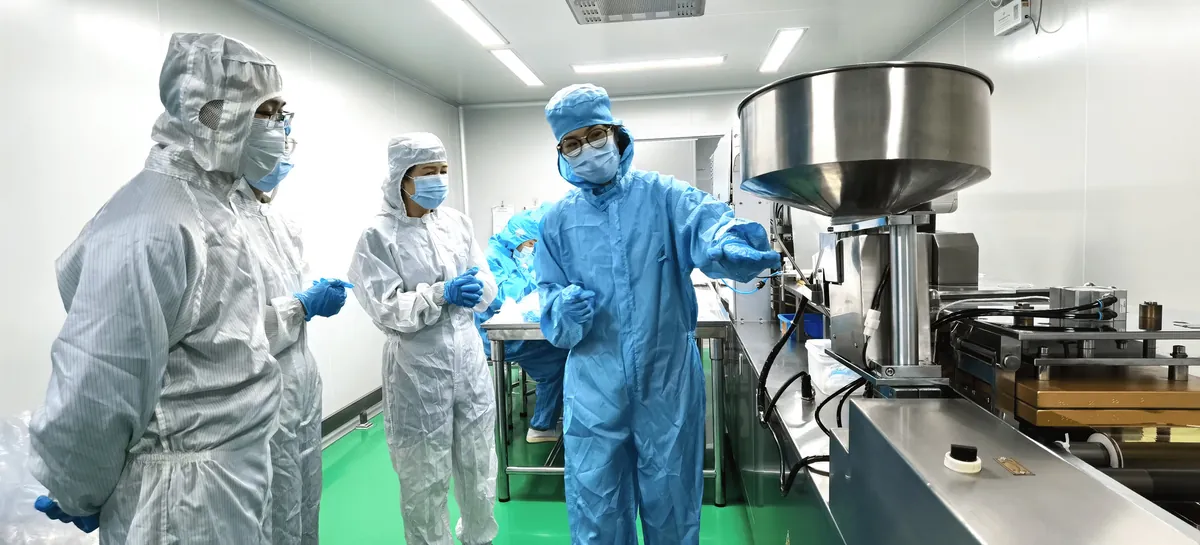
Treating "sampling" as a single event is the most common source of a dispute later. In practice the work moves through stages, and each one confirms something different:
- Laboratory trial — establishes whether the formula works at bench scale: process feasibility and a first sensory read. Samples from this stage normally cannot support a discussion about packaging, stability or batch release.
- Pilot or engineering batch — produced on equipment and at quantities closer to the real run, to set the process window, check fill weight distribution, confirm packaging fit and take a first stability look. Scale effects are invisible at bench scale.
- First or confirmation batch — produced with the agreed materials, packaging and process, used to confirm the finished-product state, the test methods and the acceptance criteria. This is the batch whose conclusions can support a production release.
- Production batch — the confirmed conditions repeated, released against batch records.
Each stage should leave two lists: what has been confirmed, and what is still open. While items remain open, the batch should not be treated as a final result, and it is usually better not to move on to the next stage. Skipping stages does not save time; it moves the problem to after the order is already running.
There is no universal stage format, so put the sample quantity, the confirmation scope and the responsible party for each stage into the project documents.
Version control: every change gets an identifier
Any change to the formula, the packaging or the process should produce a new version number rather than overwrite the previous one. A version record needs at least:
- Version number and date, using a numbering rule agreed in advance, so that names like "final v2" never end up in a folder.
- What changed — which material, which specification, which process step, and why.
- The impact assessment — whether the change touches stability, test items, labelling, or an acceptance criterion that has already been agreed.
- The approval status — who proposed it, who assessed it, who approved it.
The value of a version number shows up when something is disputed. The question then becomes: which version did the production batch use, and how does it differ from the version approved at sampling? Without version records that question can only be answered from memory.
Changes also differ in weight. A change to the formula, a specification or a critical process step usually needs reassessment and a new conclusion. A change to label wording, layout or a non-functional packaging adjustment can follow a lighter path. Agreeing the change tiers in advance stops every small edit from travelling through the full cycle.
What retained samples do, and what they cannot do
A sealed sample is one kept at a point both sides agree, in a state both sides accept, for later comparison. A retained sample is one held per batch for traceability and stability observation. The purposes differ, and one does not substitute for the other.
Ask four questions:
- At what point is the sealed sample taken, and how do batch and quantity correspond?
- What are the storage conditions and the retention period for retained samples?
- Is retention per batch, or sampled on a cycle?
- Who owns the samples, and how are they disposed of?
Understand the limits as well. A sealed sample represents the state at the moment it was sealed; it does not prove the condition of every batch made afterwards. A retained sample supports observation and traceability; it is not a release decision. A sample stored under laboratory conditions is not the same as a sample that spent its life in a warehouse or on a shelf, and the two trends are not interchangeable.
For formulas containing volatile, oxidation-prone or moisture-sensitive components, the way the retained sample is stored changes the result, so the storage conditions belong in the plan rather than in a default instruction to "keep it somewhere cool".
Read a certificate of analysis in a fixed order
When a report arrives, read it in a fixed sequence rather than starting with the conclusion:
- Sample information — name, specification, batch number, fill or pack specification, how the sample was taken or submitted, and how many units were submitted.
- Test information — test date, method, the criteria used, and the laboratory's own accreditation details.
- Items and results — each line compared against the acceptance criteria agreed in advance.
- The limits of the conclusion — which sample, which items and which criteria the word "pass" actually covers.
The distinction that matters most is between a submitted sample and a sampled one. A third-party laboratory testing a sample you sent is testing that submission. A laboratory drawing samples on site under a defined procedure produces a different kind of evidence. A brand's own sample sent for testing normally cannot demonstrate the condition of the factory's batches.
The US rules for dietary supplements treat the batch production record as a category of record in its own right — see 21 CFR Part 111, Subpart I — and § 111.75 makes the point that a specification is met only against criteria set in advance. These are US texts, used here as a checkable reference for what a batch record should contain and what "pass" means; they are not a statement of Chinese regulatory requirements. Subpart J places laboratory operations inside the production control system. On the China side, the direction can be found in the national standards on good manufacturing practice for health foods: look up the current standard number, version and status in the national standards full-text portal rather than relying on a summary.
The records you need before a batch is released
Before the first production run, agree the list of documents that answers "why was this batch released", with a named provider and a date for each:
- Batch production record — material batch numbers and quantities, processing steps and key parameters, actual output and losses, and how any rework or deviation was handled.
- Finished-product release record — who released it, when, and against which specification and test results.
- Test reports — the agreed items, with the methods and criteria used.
- Incoming material records — material test reports, supplier qualification, and traceability to the material batch.
- Packaging and label approval — the packaging version actually used, the final artwork, and the approval record.
- Retained and sealed sample records — sample numbers, storage conditions, and disposal at the end of the period.
The list exists so that both sides read "documentation" in the same way. It can be adjusted as the project runs, provided the adjustment itself is recorded.
Deviations, rework and change control
Deviations happen in production. The question is whether they are recorded, assessed and closed.
Agree a four-step handling rule in the project documents:
- Record — when it happened, at which step, what was observed, which batches and quantities were involved.
- Assess — who judges whether the batch is affected, how wide the impact is, and whether additional testing is needed.
- Decide — release, rework, re-process, downgrade or scrap, and who approves that decision.
- Close — whether the outcome is reflected back into process parameters, a supplier or a test method, so the same problem does not recur.
The line between rework and re-processing deserves to be drawn in advance, because the two have different acceptance conditions and the argument afterwards rarely resolves.
After a deviation is closed, check whether conclusions drawn earlier still hold. A batch that passed finished-product testing before a rework may need testing again afterwards, and a label approval may no longer match what was actually filled.
Turn the checking method into project documents
If you are still preparing, organise the material with the OEM/ODM project brief and write the acceptance document scope into it. Before sampling, settle the format direction — see choosing between softgel, tablet and powder — and confirm the factory's credential scope with verifying a manufacturer's certificates.
To discuss a specific project, use the OEM/ODM project enquiry form with the product, the target market and the stage you have reached. If more than one market is in scope, the differences between market versions are handled separately in the four checking lines for a multi-market formula. The method here is a way of checking; the document requirements for a specific product come from the rules in the destination market and from a project-specific assessment.
Sources and scope
- eCFR · 21 CFR Part 111, Subpart I — Batch Production Record
US rules setting out the content of a batch production record for dietary supplements; they are a checkable reference for what a batch record should contain, and are not a statement of Chinese regulatory requirements or of what any particular factory must keep.
- eCFR · 21 CFR 111.75 — Determining whether specifications are met
US text making the point that a specification is met only against criteria set in advance; it supports the reading order used here, but it is US law and does not define the acceptance criteria for your project.
- eCFR · 21 CFR Part 111, Subpart J — Laboratory Operations
US rules on laboratory operations within dietary supplement manufacturing, used to show that finished-product testing sits inside the production control system rather than beside it; it is a US text and is not guidance on Chinese testing practice.
- openstd · National Standards Full-Text Portal
Official portal for the full text of Chinese national standards; it is the place to look up the current number, version and status of standards on good manufacturing practice for health foods, and the article deliberately cites no standard number of its own.
Sources checked and this article last revised on 2026-10-23. Source pages may change; refer to their current content.